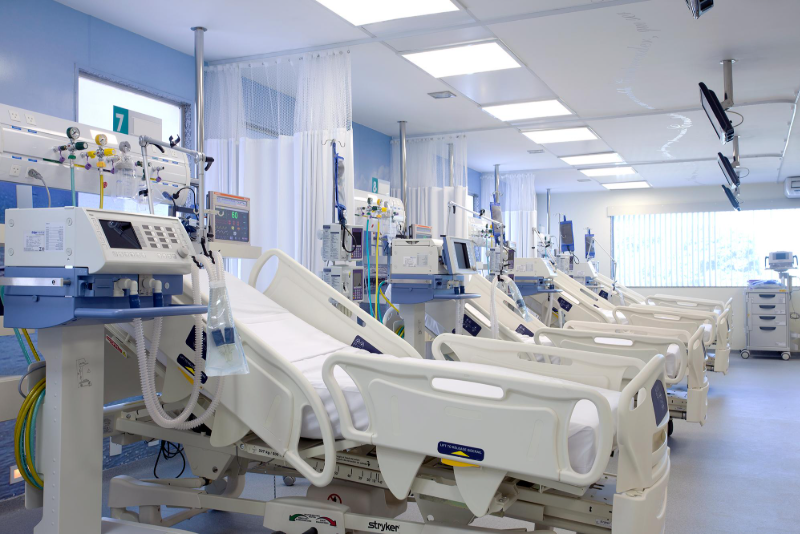
An Intensive Care Unit (ICU) is a specialized department in a hospital where patients with serious illnesses, life-threatening injuries, or complications after surgery receive continuous medical attention. Patients admitted to the ICU often require close monitoring, advanced life-support systems, and specialized equipment to maintain essential body functions and support recovery.
ICU equipment plays a vital role in modern healthcare because it helps doctors and nurses monitor patients’ conditions, deliver oxygen, support breathing, administer medications, and respond quickly to medical emergencies. The type of equipment used depends on the patient’s medical condition, age, and treatment requirements.
Understanding the equipment used in an ICU helps patients, families, healthcare students, and caregivers learn how critical care works. This article explains the most common ICU equipment, its functions, and why each device is important in patient care.
1. Patient Monitor
A patient monitor is one of the most important pieces of equipment in an ICU. It continuously displays vital signs, allowing healthcare professionals to observe changes in a patient’s condition.
Patient monitors commonly measure heart rate, blood pressure, oxygen saturation, respiratory rate, and body temperature, depending on the device and connected sensors.
The monitor displays information on a screen and may produce alarms when readings fall outside configured limits. These alarms alert healthcare professionals to possible problems that require assessment.
For example, if a patient’s oxygen level drops or their heart rate changes significantly, the monitor can alert the ICU team so that they can investigate and respond.
Patient monitors are particularly important for people with severe infections, heart conditions, breathing difficulties, and complications following major surgery.
2. Mechanical Ventilator
A mechanical ventilator is a life-support machine that helps patients breathe when they cannot breathe adequately on their own.
The machine delivers air, usually with a controlled concentration of oxygen, through a breathing tube placed into the windpipe or through an appropriate non-invasive breathing interface.
Ventilators are commonly used for patients with severe respiratory failure, serious lung infections, major injuries, or complications following surgery.
A ventilator can support breathing while doctors treat the underlying medical condition. Healthcare professionals adjust its settings according to the patient’s needs and monitor for complications.
Not every ICU patient requires a ventilator. Some patients can breathe independently but need oxygen or other forms of respiratory support.
3. Oxygen Supply System
Oxygen supply systems provide additional oxygen to patients who have low blood oxygen levels or need respiratory support.
In an ICU, oxygen may be supplied through a central hospital oxygen system, oxygen cylinders, or specialized equipment. It can be delivered through nasal cannulas, face masks, high-flow nasal oxygen systems, or ventilators.
Oxygen therapy is useful for patients experiencing breathing difficulties, pneumonia, certain heart conditions, or other illnesses that affect oxygen levels.
Healthcare professionals determine the appropriate oxygen concentration and delivery method based on the patient’s condition and oxygen measurements. Oxygen must be used carefully because excessive oxygen can also be harmful in some circumstances.
4. Infusion Pump
An infusion pump is a medical device that delivers fluids, medications, and other prescribed solutions into a patient’s bloodstream at a controlled rate.
ICU patients may require continuous administration of medicines such as sedatives, pain relief, antibiotics, or medications that support blood pressure. Infusion pumps help ensure that these treatments are delivered accurately.
Some pumps are designed for general intravenous fluids, while others are specialized for particular medications or delivery requirements.
Because certain ICU medications require precise dosing, infusion pumps are essential for safe and controlled treatment. Nurses regularly check the pump settings, tubing, medication supply, and infusion site.
5. Syringe Pump
A syringe pump is a device that uses a syringe to deliver small amounts of medication at a carefully controlled rate.
It is especially useful when a patient needs a medication delivered continuously or in very small doses. Examples include certain pain-relief medicines, sedatives, and medications used to support circulation.
Syringe pumps are often used alongside other infusion devices in the ICU. They allow healthcare professionals to administer prescribed medications with a high degree of control.
The syringe, medication, tubing, and pump settings must be checked according to hospital safety procedures.
6. Defibrillator
A defibrillator is an emergency medical device used to treat certain dangerous heart rhythm disturbances.
During some life-threatening arrhythmias, such as ventricular fibrillation or pulseless ventricular tachycardia, a defibrillator delivers an electrical shock to help restore an effective heart rhythm.
Defibrillators may be manual or automated, depending on their design and intended use. In an ICU, trained healthcare professionals use them as part of emergency resuscitation when indicated.
A defibrillator is not used for every abnormal heart rhythm or every cardiac arrest. Its use depends on the rhythm identified and established resuscitation protocols.
This equipment is essential because some dangerous heart rhythms require immediate treatment to improve the patient’s chance of survival.
7. Suction Machine
A suction machine removes mucus, blood, saliva, and other secretions from the airway or certain body cavities when necessary.
Some critically ill patients cannot clear their airways effectively because they are unconscious, weak, or receiving mechanical ventilation.
Suction equipment helps healthcare professionals maintain airway cleanliness and support effective breathing. It may be connected to specialized catheters used to remove secretions from the mouth, nose, or breathing tube.
Suctioning must be performed by trained staff using appropriate techniques because unnecessary or improper suctioning can cause injury or complications.
8. Electrocardiogram (ECG) Machine
An electrocardiogram machine records the electrical activity of the heart. It helps healthcare professionals identify abnormal heart rhythms and other possible signs of heart problems.
In an ICU, ECG monitoring is often incorporated into the bedside patient monitor through electrodes attached to the patient’s chest and limbs.
A separate 12-lead ECG machine may also be used when a more detailed recording is required, such as when doctors investigate suspected heart attacks or certain cardiac abnormalities.
ECG equipment is particularly important for patients with cardiovascular disease, serious electrolyte disturbances, and conditions that may affect heart function.
9. Blood Pressure Monitoring Equipment
Blood pressure monitoring equipment measures the pressure of blood flowing through the arteries.
In the ICU, blood pressure may be measured using an inflatable cuff or an invasive arterial line. The appropriate method depends on the patient’s condition and the need for continuous monitoring.
An arterial line consists of a small catheter placed into an artery by trained healthcare professionals. It provides continuous blood pressure measurements and can also be used to collect arterial blood samples.
Continuous invasive monitoring is often useful for patients with severe shock, unstable blood pressure, or certain major illnesses and operations.
Blood pressure readings help doctors assess circulation and determine whether treatments are working effectively.
10. Pulse Oximeter
A pulse oximeter estimates the percentage of hemoglobin in the blood carrying oxygen. This measurement is known as peripheral oxygen saturation, or SpO2.
The device commonly uses a sensor attached to a finger, toe, or another suitable location. Some ICU monitors incorporate pulse oximetry into their monitoring systems.
Pulse oximeters help healthcare professionals detect low oxygen levels and assess the response to oxygen therapy.
However, pulse oximetry has limitations. Poor circulation, movement, certain skin-related factors, and other technical issues can affect accuracy. In some situations, an arterial blood gas test is needed for a more complete assessment.
11. Hospital Bed and Pressure-Relieving Mattress
ICU beds are specially designed to support seriously ill patients and make nursing care easier.
Many ICU beds have adjustable positions, side rails, height controls, and mechanisms that help healthcare professionals reposition patients safely.
Pressure-relieving mattresses help distribute body weight and reduce the risk of pressure injuries in patients who cannot move independently.
Regular repositioning, skin assessments, and appropriate pressure-relieving equipment are important because prolonged immobility can cause skin damage and other complications.
Some advanced beds also include weighing systems and other features that assist with patient care.
12. Hemodialysis and Continuous Renal Replacement Therapy (CRRT) Machines
Some ICU patients develop acute kidney injury, a condition in which the kidneys suddenly lose some or all of their normal filtering ability.
Dialysis equipment may be used to remove waste products and excess fluid from the blood when the kidneys cannot perform these functions adequately.
Conventional hemodialysis removes waste and fluid over a treatment period. Continuous renal replacement therapy, or CRRT, performs similar functions more gradually over an extended period and is often considered for critically ill patients who may not tolerate rapid fluid shifts.
These treatments require specialized equipment and trained staff. The choice of therapy depends on the patient’s circulation, kidney function, fluid balance, and overall medical condition.
13. Blood Gas Analyzer
A blood gas analyzer measures important components of a blood sample, including acidity (pH), oxygen, and carbon dioxide. Depending on the analyzer, it may also measure other values such as bicarbonate and electrolytes.
Blood gas testing helps doctors evaluate how effectively a patient is breathing, whether the body is maintaining the correct acid-base balance, and how severe certain respiratory or metabolic problems may be.
For example, a patient with severe breathing difficulties may need a blood gas test to determine whether carbon dioxide is accumulating in the blood.
These measurements can guide decisions about oxygen therapy, ventilator support, and other treatments.
14. Portable X-Ray Machine
Portable X-ray machines allow healthcare professionals to obtain imaging at the patient’s bedside without transporting a critically ill patient to the radiology department.
Bedside X-rays may be used to assess lung conditions, check the position of certain medical tubes and lines, and investigate complications such as a collapsed lung.
Portable imaging is particularly useful for patients who are too unstable to move safely.
The decision to perform an X-ray depends on the clinical situation, and radiation safety procedures must be followed.
15. Ultrasound Machine
Ultrasound machines use sound waves to produce images of internal organs, blood vessels, and other body structures.
In the ICU, ultrasound may help doctors assess heart function, examine the lungs, detect fluid around organs, evaluate blood vessels, and guide the placement of certain catheters.
Bedside ultrasound can provide useful information quickly without requiring a patient to leave the ICU.
Its usefulness depends on the question being investigated and the expertise of the healthcare professional performing and interpreting the examination.
16. Central Oxygen and Medical Gas Systems
ICUs often have wall outlets connected to central hospital systems that supply oxygen and medical air. These systems allow respiratory equipment to operate without relying solely on individual cylinders.
Other medical gas arrangements may be available depending on the hospital’s design and clinical requirements.
The ICU may also have suction outlets connected to a central vacuum system for removing secretions and fluids.
Medical gas and suction systems require regular inspection and maintenance to help ensure a reliable supply and safe operation.
17. Emergency Crash Cart
A crash cart is a mobile trolley containing equipment and supplies used during medical emergencies.
Its contents vary by hospital, but it may include emergency medications, airway equipment, intravenous supplies, a manual resuscitation bag, and equipment for cardiac resuscitation.
A defibrillator may be located on or near the crash cart.
The crash cart allows the ICU team to access essential equipment quickly when a patient experiences cardiac arrest or another life-threatening emergency.
Hospitals typically check crash carts regularly to confirm that required supplies are available, functional, and within their expiry dates.
18. Nebulizer
A nebulizer converts liquid medication into a mist that can be inhaled into the respiratory tract.
It may be used to deliver certain medicines that help relieve airway narrowing or treat other respiratory problems.
In an ICU, nebulized medications may be administered through a mask, mouthpiece, or a suitable respiratory circuit, depending on the patient’s breathing support and the prescribed treatment.
A nebulizer is not required for every patient with a respiratory condition. The choice of treatment depends on the diagnosis and the healthcare professional’s assessment.
19. Enteral Feeding Pump
Critically ill patients may be unable to eat enough food by mouth because of unconsciousness, swallowing difficulties, or severe illness.
An enteral feeding pump delivers liquid nutrition through a feeding tube into the stomach or small intestine at a prescribed rate.
This equipment helps patients receive calories, protein, fluids, and other nutrients when oral feeding is unsafe or inadequate.
Healthcare professionals monitor feeding tolerance, tube position according to the appropriate protocol, fluid balance, and nutritional requirements to reduce the risk of complications.
20. Urinary Catheter and Urine Output Monitoring Equipment
A urinary catheter is a flexible tube inserted into the bladder to drain urine when clinically necessary.
In the ICU, it may be used for patients who cannot urinate normally or whose urine output needs to be measured accurately.
Urine output can provide important information about kidney function, hydration, and circulation. It is often monitored closely in patients with shock, severe infections, kidney problems, or major surgery.
Because urinary catheters can increase the risk of infection, they should only be used when indicated and removed as soon as they are no longer needed.
21. Temperature Monitoring Equipment
Temperature monitoring equipment helps detect fever, low body temperature, and changes associated with serious illness.
Depending on the patient’s condition, temperature may be measured using skin, ear, oral, or other appropriate sensors. In selected critically ill patients, more specialized methods may be required.
Changes in body temperature can occur with infections, environmental exposure, medication effects, or other medical conditions.
Regular monitoring helps healthcare professionals assess a patient’s progress and identify problems that may require further investigation.
22. Personal Protective Equipment (PPE)
Personal protective equipment is essential for protecting patients and healthcare workers from infections and exposure to potentially infectious materials.
Common PPE used in the ICU includes gloves, protective gowns, medical masks, respirators when indicated, and eye protection.
The type of PPE required depends on the patient’s infection risks, the procedure being performed, and the hospital’s infection-prevention policies.
Hand hygiene, appropriate cleaning, safe waste disposal, and correct PPE use are all important parts of ICU infection control.
Why Is ICU Equipment Important?
ICU equipment supports the delivery of specialized care to patients whose conditions may change rapidly. Each device has a particular role, but the equipment is most effective when combined with professional assessment and continuous nursing care.
The major benefits of ICU equipment include:
- Continuous monitoring: Helps healthcare professionals identify changes in vital signs.
- Life support: Supports breathing and circulation when the body cannot function adequately on its own.
- Accurate medication delivery: Allows controlled administration of prescribed drugs and fluids.
- Early detection of complications: Helps the ICU team recognize potential problems and respond promptly.
- Diagnostic support: Provides information about heart function, kidney function, oxygen levels, and other aspects of health.
- Improved patient safety: Supports careful observation, infection prevention, and timely treatment.
Although these devices are essential, they do not replace clinical judgment. Doctors, nurses, respiratory therapists, and other trained professionals must interpret the information and use the equipment appropriately.
Who Operates ICU Equipment?
ICU equipment is operated and monitored by trained healthcare professionals.
Intensive care doctors assess patients, establish treatment plans, and make decisions about life-support measures. ICU nurses monitor vital signs, administer medication, provide personal care, and check equipment. Respiratory therapists, where available, help manage ventilators and other breathing support devices.
Biomedical engineers and clinical engineering teams maintain, test, and repair medical equipment. Other specialists, including pharmacists, physiotherapists, dietitians, and renal care teams, may also contribute to treatment.
Teamwork is essential because critically ill patients often need several types of treatment at the same time.
Conclusion
The Intensive Care Unit uses a wide range of specialized equipment to monitor, diagnose, and treat patients with serious medical conditions. Common examples include patient monitors, mechanical ventilators, oxygen supply systems, infusion pumps, defibrillators, suction machines, ECG machines, dialysis equipment, blood gas analyzers, and emergency crash carts.
Each device serves a specific purpose, from supporting breathing and maintaining circulation to delivering medications and detecting changes in a patient’s condition. The exact equipment available depends on the hospital’s facilities and the needs of its patients.
Most importantly, ICU equipment works alongside the knowledge and skills of trained healthcare professionals. Proper use, regular maintenance, infection control, and continuous patient assessment help ensure that these devices support safe and effective critical care.
Leave a Reply