First aid is the immediate assistance provided to someone who is injured or suddenly becomes ill before professional medical help arrives. It plays an important role in emergencies because quick and appropriate action can help protect the injured person, prevent their condition from worsening, and sometimes save their life.
Accidents can happen at home, in schools, workplaces, on roads, or in public places. Common emergencies include cuts, burns, falls, choking, bleeding, fainting, and sudden medical problems. Knowing basic first aid safety tips can help people respond calmly and responsibly when an emergency occurs.
However, first aid must be provided safely. An untrained person who acts without assessing the situation may unintentionally put themselves or the injured person at greater risk. Understanding how to assess an emergency, protect yourself, call for help, and provide appropriate assistance is therefore essential.
This article explains important first aid safety tips, common emergency situations, essential first aid supplies, and mistakes to avoid when helping an injured person.
1. Check the Scene Before Providing First Aid
The first and most important first aid safety tip is to check whether the surrounding area is safe before approaching the injured person.
An emergency scene may contain hazards such as traffic, fire, smoke, exposed electrical wires, broken glass, chemicals, or unstable structures. Entering a dangerous area without proper protection could result in additional injuries.
Before providing assistance, look around carefully and identify any immediate dangers. If the area is unsafe, keep your distance and contact the appropriate emergency services.
For example, if someone has been injured in a road accident, avoid walking into moving traffic. If an electrical appliance has injured someone, do not touch the person until the electricity has been safely switched off.
Remember: Your safety is important. You cannot effectively help another person if you also become injured.
2. Call Emergency Services When Necessary
One of the most important first aid safety tips is knowing when to seek professional medical assistance.
Some injuries can be treated with basic first aid, while others require immediate emergency care. Call emergency services if someone is unconscious, is not breathing normally, has severe bleeding, experiences severe breathing difficulties, or shows signs of a stroke or heart attack.
In the United Kingdom, call 999 or 112 for emergencies. In India, call 112 for emergency assistance. In other countries, use the local emergency number.
When calling for help, provide clear information about your location, the nature of the emergency, the number of injured people, and any immediate dangers.
Follow the emergency call handler’s instructions. They may guide you through CPR or other essential steps while professional help is on the way.
Do not delay calling for help while attempting treatments that are beyond your training.
3. Wash Your Hands and Use Protective Equipment
Good hygiene is essential when providing first aid because contact with blood, vomit, or other body fluids can expose both the helper and the injured person to infection.
Whenever possible, wash your hands with soap and water before and after providing first aid. If handwashing facilities are unavailable, use an alcohol-based hand sanitizer when appropriate.
Wear disposable gloves when dealing with blood, open wounds, or body fluids. Eye protection or other protective equipment may be necessary when splashes are possible.
Avoid direct contact with another person’s blood. If you have cuts or broken skin on your hands, cover them with a waterproof dressing before providing assistance.
After helping an injured person, dispose of contaminated materials safely and clean any affected surfaces according to appropriate hygiene guidance.
4. Stay Calm and Reassure the Injured Person
Emergencies can be frightening, and injured people may feel anxious, confused, or distressed. Remaining calm can help you think clearly and provide appropriate assistance.
Approach the person carefully, introduce yourself if possible, and explain what you are doing. Speak in a reassuring voice and avoid making promises about the outcome.
If the person is conscious, ask what happened and whether they are experiencing pain or other symptoms. Listen carefully and respect their privacy.
Avoid crowding the injured person with unnecessary onlookers. If other people are present, ask someone specific to call emergency services or retrieve the first aid kit.
Clear communication and a calm approach can make it easier to assess the situation and provide safe support.
5. Check Whether the Person Is Responsive and Breathing Normally
After confirming that the scene is safe, check the injured person’s responsiveness.
Speak loudly and clearly, asking whether they can hear you. If there is no response, check whether they are breathing normally.
If the person is unresponsive and is not breathing normally, including if they are only gasping, call emergency services and begin CPR according to your training or the emergency call handler’s instructions. Ask someone to bring an automated external defibrillator (AED) if one is available.
If the person is unresponsive but breathing normally, place them in the recovery position when appropriate, provided there is no suspected spinal injury or other reason that makes movement unsafe. Monitor their breathing continuously and be prepared to begin CPR if it becomes abnormal.
If a serious head, neck, or spinal injury is suspected, avoid unnecessary movement. However, maintaining an open airway takes priority, so follow emergency dispatcher instructions.
6. Control Severe Bleeding Safely
Severe bleeding can become life-threatening within a short period. Applying appropriate pressure to a bleeding wound can help control blood loss while emergency assistance is arranged.
If it is safe to do so, wear disposable gloves and apply firm, continuous direct pressure to the wound using sterile gauze or a clean cloth.
If blood soaks through the dressing, do not repeatedly remove the original dressing to inspect the wound. Continue applying pressure and follow emergency guidance about adding dressings.
If an object is embedded in the wound, do not remove it. Apply pressure around the object rather than directly on it.
For life-threatening bleeding from an arm or leg, a commercial tourniquet may be appropriate if one is available and you know how to use it, or if an emergency dispatcher guides you. Do not loosen a tourniquet once it has been applied.
Call emergency services for severe or uncontrolled bleeding. Do not delay seeking help while attempting to manage a major injury yourself.
7. Treat Burns and Scalds Correctly
Burns may result from hot liquids, flames, steam, chemicals, or electricity. The correct first aid response depends on the cause and severity of the injury.
For a thermal burn, cool the affected area under cool running water for approximately 20 minutes as soon as possible. Remove nearby jewellery and clothing unless it is stuck to the skin.
Do not apply ice, butter, toothpaste, oils, or other household substances to a burn. These may damage the skin or interfere with treatment.
After cooling, loosely cover the burn with an appropriate sterile, non-fluffy dressing or clean material. Do not burst blisters or pull away material stuck to the skin.
Large, deep, chemical, electrical, or otherwise serious burns require urgent medical assessment. For chemical burns, protect yourself from exposure, remove contaminated clothing when safe, and follow emergency guidance on decontamination.
8. Do Not Move Someone With a Suspected Serious Injury Unnecessarily
After a fall, road accident, or major impact, the injured person may have damage to their neck, spine, or other bones even if the injury is not immediately obvious.
Avoid moving the person unnecessarily if a serious injury is suspected. Encourage them to remain still and support their head in the position found if it is safe to do so.
Do not attempt to straighten a suspected broken bone or force an injured limb into position. Immobilization and further treatment should be guided by appropriate training and professional advice.
There are exceptions to keeping a person still. If the scene is dangerous or the person’s airway is threatened, movement may be necessary to protect life. Follow emergency dispatcher instructions whenever possible.
9. Handle Choking Emergencies Carefully
Choking occurs when an object blocks the airway and prevents normal breathing. It can be particularly dangerous because the person may become unconscious quickly.
If the person can cough forcefully, speak, or breathe, encourage them to continue coughing and monitor them closely.
If an adult or child over one year old has severe choking and cannot speak, breathe, or cough effectively, call emergency services or ask someone nearby to do so. Give up to five back blows, checking after each one. If these do not work, give up to five abdominal thrusts. Alternate between the two methods until the obstruction clears or the person becomes unresponsive.
Do not perform abdominal thrusts on infants under one year old. Infant choking requires age-appropriate back blows and chest thrusts.
If a choking person becomes unresponsive, carefully lower them to a firm surface and begin CPR according to your training and the emergency call handler’s instructions.
Never perform a blind finger sweep inside the mouth. Remove an object only if it is clearly visible and can be taken out safely.
10. Know What to Do During a Seizure
A seizure can cause involuntary movements, loss of awareness, or temporary confusion. Although seizures can be frightening to witness, the priority is to prevent injury.
Move nearby objects away from the person and protect their head with something soft if possible. Loosen tight clothing around the neck and observe how long the seizure lasts.
Do not restrain the person, hold their limbs down, or place anything in their mouth. A person cannot swallow their tongue, and putting objects in their mouth can cause injury or block the airway.
When the seizure ends, check their breathing. If they are unconscious but breathing normally, place them in the recovery position when appropriate and monitor them.
Call emergency services if it is the person’s first seizure, the seizure lasts five minutes or longer, another seizure follows without recovery, the person has difficulty breathing, they are seriously injured, or the seizure occurs in water. Follow any individual seizure emergency plan if one is available.
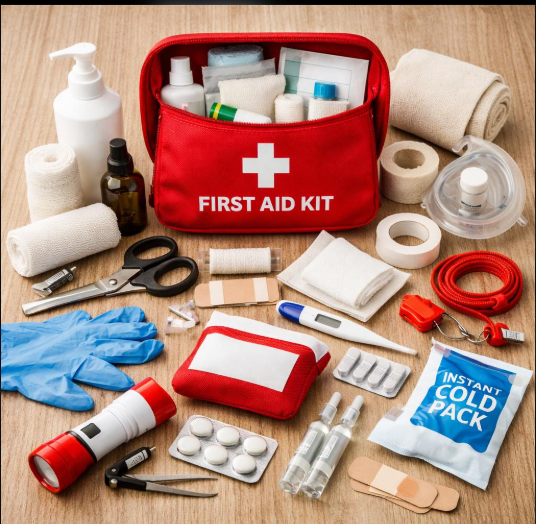
11. Keep a Well-Stocked First Aid Kit
A properly stocked first aid kit helps people respond to common injuries more effectively.
Essential supplies may include:
- Adhesive plasters in different sizes.
- Sterile gauze pads and wound dressings.
- Roller bandages and triangular bandages.
- Disposable gloves.
- Medical adhesive tape.
- Antiseptic wipes for appropriate use.
- Scissors and tweezers.
- A digital thermometer.
- A CPR face shield or breathing barrier.
- A cold pack.
- Emergency contact information.
- A first aid instruction guide.
The contents should be suitable for the location and the people who may need assistance. Workplaces, schools, vehicles, and homes may require different supplies.
Check the kit regularly, replace used items, and remove expired or damaged products. Store it in a clean, dry place that is accessible to responsible adults but kept away from young children.
12. Avoid Giving Food, Drinks, or Unnecessary Medication
Do not automatically give food, water, or medication to someone who has been injured or suddenly become ill.
An unconscious person or someone with a reduced level of awareness may choke if given anything by mouth. People with certain injuries or medical conditions may also need urgent procedures that require an empty stomach.
Do not give another person’s prescription medication or recommend medication beyond your training. If the person has a known medical condition, follow their established emergency plan when appropriate.
For suspected poisoning, do not induce vomiting or give home remedies unless instructed by a qualified poison specialist or emergency professional.
Contact emergency services or a poison information service when poisoning is suspected, and provide details about the substance, amount, and time of exposure if known.
13. Recognize the Signs of a Stroke or Heart Attack
Recognizing the warning signs of serious medical emergencies can help people obtain treatment sooner.
A stroke may cause sudden facial drooping, weakness or numbness in one arm, or difficulty speaking. Other warning signs include sudden loss of vision, severe dizziness, or a sudden severe headache.
Remember the FAST approach:
- Face: Ask the person to smile and check for facial drooping.
- Arms: Ask them to raise both arms and check whether one arm falls.
- Speech: Ask them to repeat a simple sentence and listen for slurred or unusual speech.
- Time: Call emergency services immediately if any of these signs appear.
A heart attack may cause chest pressure or discomfort, pain spreading to the arm, jaw, back, or shoulder, breathlessness, sweating, nausea, or lightheadedness.
Not everyone experiences the same symptoms. If a heart attack or stroke is suspected, seek emergency help immediately rather than waiting for symptoms to disappear.
14. Learn CPR and How to Use an AED
Cardiopulmonary resuscitation (CPR) is an emergency procedure used when a person is unresponsive and not breathing normally.
For an adult, hands-only CPR involves pushing hard and fast in the centre of the chest at a rate of approximately 100–120 compressions per minute. Trained rescuers should follow their CPR training, including rescue breaths when appropriate.
An automated external defibrillator (AED) analyses the heart rhythm and advises whether a shock is needed. Follow its spoken instructions and ensure nobody touches the person when the device is analysing or delivering a shock.
Do not delay CPR while waiting for an AED to arrive. If possible, ask another person to retrieve the device while you provide assistance.
Taking a certified first aid and CPR course is one of the best ways to develop the skills and confidence needed to respond to emergencies.
15. Monitor the Injured Person Until Help Arrives
Providing first aid does not end after the initial treatment. Continue observing the person’s condition until professional help takes over or it is safe to stop.
Watch for changes in breathing, alertness, skin colour, pain, or bleeding. If symptoms worsen, inform emergency services and follow their instructions.
Keep the person as comfortable as possible without moving them unnecessarily. Protect them from extreme cold or heat and explain what is happening.
If the person becomes unresponsive or stops breathing normally, reassess the situation and begin the appropriate emergency response.
When paramedics arrive, explain what happened, the symptoms you observed, the first aid you provided, and any relevant information the person shared.
16. Avoid Common First Aid Mistakes
Even when people have good intentions, incorrect first aid can worsen an injury or delay necessary treatment.
Common mistakes to avoid include:
- Entering a dangerous scene without assessing the risks.
- Delaying emergency medical assistance.
- Moving a person with a suspected spinal injury unnecessarily.
- Applying ice directly to a burn.
- Putting objects in the mouth of someone having a seizure.
- Giving food or water to an unconscious person.
- Removing an embedded object from a wound.
- Applying a tourniquet incorrectly or loosening one after application.
- Using unverified home remedies for serious injuries.
- Assuming a person is fine because they appear calm or have no obvious injuries.
When you are unsure what to do, call emergency services and follow the instructions provided by the call handler.
17. Make First Aid Safety a Regular Practice
First aid preparedness should be part of everyday safety at home, school, and work.
Keep emergency numbers readily available, know the location of first aid kits and AEDs, and ensure that family members or colleagues know how to request help.
Parents and caregivers should keep medicines, chemicals, sharp objects, and other hazardous items safely stored. Employers should provide appropriate first aid supplies and arrange training according to workplace requirements.
It is also important to refresh first aid knowledge periodically because recommended techniques and guidance may change.
Learning first aid before an emergency happens makes it easier to respond calmly and correctly when someone needs help.
Frequently Asked Questions (FAQs)
1. What is the most important first aid safety tip?
The first priority is to check whether the scene is safe. Once it is safe to approach, assess the person’s condition and call emergency services when necessary.
2. What should I do before touching an injured person?
Check for hazards, use protective equipment such as disposable gloves when available, and obtain consent if the person is conscious and able to respond. If they are unresponsive, assess their condition and provide appropriate emergency assistance.
3. What should every first aid kit contain?
A basic kit should contain plasters, sterile dressings, gauze, bandages, disposable gloves, adhesive tape, scissors, and other supplies appropriate to the setting. It should be checked and restocked regularly.
4. Should I move an injured person after an accident?
Avoid unnecessary movement if a serious head, neck, back, or bone injury is suspected. Move the person only when necessary to escape immediate danger or protect their airway, and follow emergency dispatcher instructions.
5. When should I call emergency services?
Call immediately for life-threatening situations, including severe bleeding, unconsciousness, abnormal breathing, serious choking, suspected stroke, suspected heart attack, or major injuries.
6. Can first aid replace professional medical treatment?
No. First aid provides immediate assistance and helps stabilize a situation, but it does not replace professional diagnosis, emergency treatment, or follow-up care.
Conclusion
First aid safety tips are essential for protecting injured people and responding effectively to emergencies. Important practices include checking the scene for danger, calling emergency services when necessary, using protective equipment, controlling severe bleeding, treating burns correctly, recognizing serious medical symptoms, and learning CPR.
It is equally important to avoid unsafe actions, such as moving someone with a suspected spinal injury unnecessarily, giving food or drinks to an unconscious person, or using unverified home remedies.
Everyone can benefit from learning basic first aid through recognized training. With the right knowledge, preparation, and calm decision-making, people can provide safer assistance, reduce the risk of additional harm, and help ensure that injured or ill individuals receive appropriate medical care.
Disclaimer: This article provides general educational information and is not a substitute for practical first aid training or professional medical advice. In an emergency, contact the local emergency service and follow the call handler’s instructions.
Leave a Reply