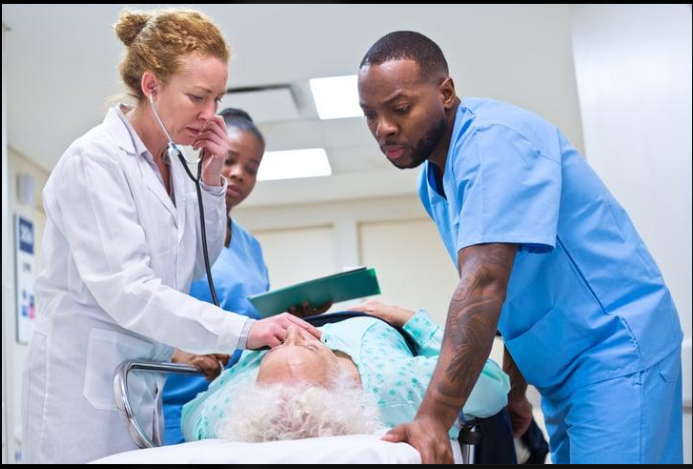
A stroke is a serious medical emergency that occurs when the blood supply to part of the brain is interrupted or when a blood vessel in the brain bursts. Without enough oxygen and nutrients, brain cells can begin to die within minutes. Early treatment can save a person’s life, reduce brain damage, and improve the chances of recovery.
Understanding the emergency treatment for stroke is important because every minute matters. A person experiencing a stroke needs immediate medical attention, even if the symptoms disappear after a few minutes.
The treatment depends on the type of stroke, the time symptoms started, the person’s medical history, and the results of brain imaging. This article explains how to recognize a stroke, what to do immediately, and how doctors treat it in the hospital.
What Are the Warning Signs of a Stroke?
Stroke symptoms often begin suddenly. Recognizing them quickly can help someone receive treatment sooner.
Common warning signs include:
- Face drooping: One side of the face may droop or feel numb. The person’s smile may appear uneven.
- Arm weakness: One arm may become weak or numb, or the person may be unable to raise both arms equally.
- Speech problems: The person may have slurred speech, difficulty speaking, or trouble understanding others.
- Sudden vision problems: Vision may become blurred, double, or lost in one or both eyes.
- Sudden balance problems: The person may experience dizziness, loss of coordination, or difficulty walking.
- Severe headache: A sudden, unusually severe headache may indicate bleeding in the brain, particularly when accompanied by other symptoms.
A useful way to remember the main warning signs is FAST:
- F — Face: Ask the person to smile.
- A — Arms: Ask them to raise both arms.
- S — Speech: Ask them to repeat a simple sentence.
- T — Time: If any sign is present, call emergency services immediately.
Do not wait for every symptom to appear. One warning sign may be enough to require emergency assessment.
What Should You Do Immediately During a Stroke?
The first few minutes are extremely important. If you suspect that someone is having a stroke, take the following steps.
1. Call Emergency Services Immediately
Call your local emergency number or arrange immediate transport to a hospital equipped to manage stroke. An ambulance is preferable when available because emergency personnel can begin assessment and notify the hospital.
Do not wait to see whether the symptoms improve. Even a mild or temporary symptom may indicate a serious problem.
2. Record the Time Symptoms Started
Note the exact time the symptoms began. If nobody witnessed the onset, record the last time the person was known to be well.
This information helps doctors determine which treatments may be appropriate. Some treatments are available only within specific time windows, although selected patients may qualify later after specialized brain imaging.
3. Keep the Person Safe and Comfortable
Help the person sit or lie down in a safe position. Keep them calm and protect them from falling.
If they are conscious and breathing normally, allow them to rest in a comfortable position. If they are unconscious but breathing normally, place them on their side if it is safe to do so, especially if vomiting is possible. Follow emergency dispatcher’s instructions.
If the person is not breathing normally, call emergency services and begin CPR if indicated, following the dispatcher’s instructions.
4. Do Not Give Food, Water, or Oral Medicine
A stroke can affect swallowing, even when this is not immediately obvious. Giving food, water, or tablets can cause choking or allow material to enter the lungs.
Do not give aspirin, blood pressure tablets, or other medicines unless an emergency clinician specifically instructs you to do so. A stroke may be caused by bleeding rather than a blocked blood vessel, and aspirin could worsen bleeding.
5. Do Not Try Home Remedies
Do not massage the person’s body, force them to walk, give herbal remedies, or delay hospital care to try a home treatment. These actions cannot reliably treat a stroke and may waste valuable time.
Even if the symptoms disappear, the person still needs urgent medical assessment because a transient ischemic attack (TIA), sometimes called a mini-stroke, can warn of a future stroke.
What Are the Main Types of Stroke?
Doctors must determine the type of stroke before choosing treatment.
1. Ischemic Stroke
An ischemic stroke occurs when a blood clot or another blockage prevents blood from reaching part of the brain. It is the most common type of stroke.
Emergency treatment may include a clot-dissolving medicine or a procedure to remove the clot, depending on the person’s eligibility and the time since symptoms began.
2. Hemorrhagic Stroke
A hemorrhagic stroke occurs when a blood vessel bursts and causes bleeding in or around the brain. High blood pressure and certain blood vessel abnormalities can contribute to this type of stroke.
Treatment focuses on controlling bleeding, carefully managing blood pressure, reversing the effects of certain blood-thinning medicines when appropriate, and reducing pressure inside the skull. Some patients require neurosurgery or another procedure.
Because these two types of stroke require different treatments, brain imaging is essential before doctors decide on the appropriate approach.
How Is Stroke Treated in the Emergency Department?
Once the patient reaches the hospital, the medical team works quickly to identify the type of stroke and prevent further injury.
1. Initial Assessment
Doctors assess breathing, circulation, blood pressure, oxygen levels, blood glucose, and neurological function. They ask when the symptoms began and review the patient’s medical history and medications.
Low blood sugar can sometimes resemble a stroke, so glucose is checked promptly.
2. CT Scan or MRI of the Brain
A non-contrast CT scan is commonly performed urgently to identify bleeding. MRI may be used when appropriate, and additional scans of the brain and neck blood vessels may help identify a blocked artery.
Imaging helps doctors distinguish an ischemic stroke from a hemorrhagic stroke and select the safest treatment.
3. Clot-Dissolving Medication
For eligible patients with an ischemic stroke, doctors may use an intravenous thrombolytic medicine, such as alteplase or tenecteplase, to dissolve the clot and restore blood flow.
Treatment is generally considered within 4.5 hours of symptom onset for eligible patients. Some people with an unknown onset time or later presentation may qualify under specialized imaging-based criteria.
These medicines can cause serious bleeding, so doctors must assess the risks and eligibility carefully. They are not treatments for a hemorrhagic stroke.
4. Mechanical Thrombectomy
Mechanical thrombectomy is a procedure in which specialists guide a catheter through a blood vessel to remove a clot blocking a major brain artery.
It may be suitable for selected patients with an ischemic str
Leave a Reply