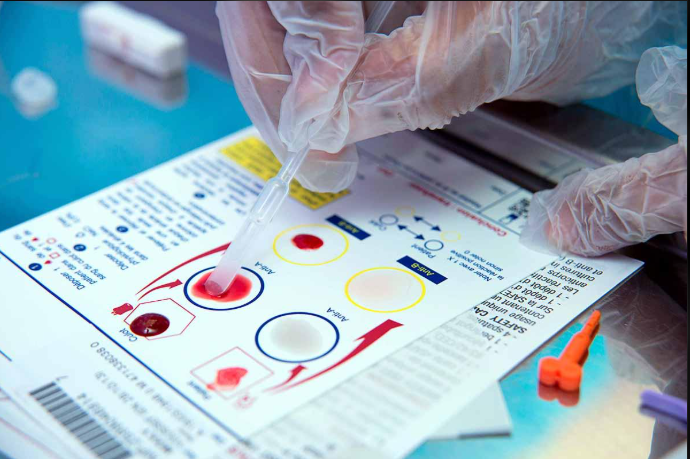
A blood group test is a common laboratory investigation used to determine a person’s blood type. Knowing your blood group is important for blood transfusions, pregnancy care, medical emergencies, and blood donation. The test identifies specific markers on the surface of red blood cells to determine whether a person belongs to blood group A, B, AB, or O and whether their blood is Rh-positive or Rh-negative.
The blood group test procedure is usually simple, quick, and painless apart from a brief needle prick when blood is collected from a vein. In most cases, no special preparation or fasting is required.
If you are planning to undergo a blood group test, understanding each step can help you feel more comfortable and know what to expect. This guide explains the complete procedure, the different testing methods, how long results take, and why knowing your blood group is important.
What Is a Blood Group Test?
A blood group test is a laboratory examination that determines the ABO and Rh blood group systems. These systems are important because certain combinations of blood types can cause dangerous reactions if incompatible blood is transfused.
The ABO system includes four main blood groups:
- Blood group A: Red blood cells have A antigens.
- Blood group B: Red blood cells have B antigens.
- Blood group AB: Red blood cells have both A and B antigens.
- Blood group O: Red blood cells do not have A or B antigens.
The Rh system commonly refers to the presence or absence of the D antigen. If the D antigen is present, the blood is generally classified as Rh-positive. If it is absent, the blood is classified as Rh-negative.
Combining these systems produces eight common blood types: A+, A−, B+, B−, AB+, AB−, O+, and O−.
However, the ABO and Rh systems are not the only blood group systems. Other blood group antigens may also matter during transfusions, particularly for people who have received multiple transfusions or have developed certain antibodies.
Step 1: Visit a Diagnostic Laboratory or Healthcare Facility
The first step is to visit a qualified diagnostic laboratory, hospital, or other healthcare facility that performs blood group testing.
Blood group tests may be requested during pregnancy, before certain medical procedures, when preparing for a possible transfusion, or when someone wants to know their blood type.
Depending on the facility, you may need a doctor’s request or referral, while some laboratories offer testing directly to patients.
At registration, the staff may ask for basic identifying information and details about the test requested. Make sure your name and other relevant details are recorded correctly because accurate identification is essential for laboratory testing.
If the test is being performed before surgery, pregnancy-related care, or a blood transfusion, tell the healthcare team why it has been requested.
Step 2: Confirm Your Identity
Before collecting the blood sample, the healthcare professional will verify your identity using the facility’s procedures.
This may involve checking your name, date of birth, patient identification number, or other approved details. Your information should match the laboratory request and the sample label.
Correct identification is particularly important for blood group testing because an error in patient identification can lead to serious problems if the result is later used for transfusion or pregnancy care.
The healthcare professional should label the sample according to the laboratory’s procedures, generally at the time of collection.
Step 3: Prepare for Blood Collection
In most cases, a blood group test does not require fasting. You can usually eat and drink normally before the appointment.
There is generally no need to stop prescribed medicines or make special dietary changes for a routine ABO and Rh blood group test.
Before the sample is collected, inform the healthcare professional if you have previously fainted during blood tests, have difficulty with needles, or have a condition that affects blood collection.
The staff member will usually ask you to sit comfortably or lie down if necessary. They will select a suitable vein, commonly on the inside of your elbow or forearm.
Step 4: Clean the Collection Site
The healthcare professional cleans the skin over the selected area using an appropriate antiseptic.
This helps reduce the risk of introducing germs into the puncture site. The skin is allowed to dry before the needle is inserted.
A tourniquet may be placed around your upper arm to make the veins easier to locate. You may be asked to form a gentle fist while the healthcare professional prepares to collect the sample.
Step 5: Collect the Blood Sample
A trained healthcare professional inserts a sterile needle into a vein and collects a small amount of blood into a suitable collection tube.
You may feel a brief sting or mild discomfort when the needle enters the skin. The collection usually takes only a few minutes.
Once enough blood has been collected, the tourniquet is released if it is still in place, and the needle is removed.
The healthcare professional then applies clean cotton or gauze to the puncture site and asks you to apply gentle pressure until the bleeding stops.
The needle is disposed of safely, and the blood sample is sent to the laboratory for analysis.
For some rapid blood grouping methods, a small blood sample obtained from a finger prick may be used. However, venous blood collection is common in laboratory testing, particularly when the result will be used for medical care.
Step 6: Label and Transport the Sample
After collection, the sample must be correctly labelled and handled according to laboratory procedures.
The label identifies the patient and links the specimen to the correct test request. The laboratory also checks whether the sample is suitable for testing.
Samples that are incorrectly labelled, insufficient, damaged, or otherwise unsuitable may need to be recollected.
Proper identification and handling are especially important when blood grouping is performed before a transfusion, during pregnancy, or as part of a hospital admission.
Step 7: Perform the ABO Blood Group Test
In the laboratory, the technician determines the ABO blood group by testing the red blood cells against specific reagents.
These reagents contain antibodies that react with particular antigens on the surface of red blood cells.
A common method is called forward grouping. The red blood cells are tested separately with anti-A and anti-B reagents.
The laboratory observes whether the cells clump together, a reaction known as agglutination.
The basic interpretation is:
- Reaction with anti-A only: Suggests blood group A.
- Reaction with anti-B only: Suggests blood group B.
- Reaction with both anti-A and anti-B: Suggests blood group AB.
- No reaction with either reagent: Suggests blood group O.
These are simplified interpretations. Laboratories follow validated procedures and may perform additional testing when the results are unclear or inconsistent.
Step 8: Determine the Rh Factor
The laboratory also tests for the Rh D antigen to determine whether the blood is Rh-positive or Rh-negative.
The red blood cells are tested with an appropriate anti-D reagent. A positive reaction generally indicates that the D antigen is present, while a negative reaction suggests that it is absent.
Some cases require additional testing because the Rh D antigen may be weakly expressed or have a variant form. The laboratory follows its procedures to resolve uncertain results when necessary.
The ABO and Rh results are then combined to establish the person’s commonly reported blood type, such as A+, B−, AB+, or O−.
Step 9: Perform Additional Checks When Necessary
Depending on why the test was requested, the laboratory or healthcare team may perform further blood bank investigations.
For example, before a blood transfusion, determining the patient’s ABO and Rh type alone is not enough. Additional testing, such as an antibody screen and compatibility testing or crossmatching, may be required to help ensure that the selected donor blood is suitable.
During pregnancy, Rh status can be important because an Rh-negative pregnant patient carrying an Rh-positive baby may need additional assessment and preventive care.
If the ABO results do not match the expected pattern, the laboratory may repeat the test or carry out additional investigations before releasing the result.
Step 10: Receive Your Blood Group Report
After the laboratory completes the required testing and checks, the result is reviewed and released according to the facility’s procedures.
A routine blood group test may be completed within a few hours or on the same day, although reporting times vary between laboratories. Some facilities may take longer depending on their workload or whether additional testing is needed.
Your report generally states your ABO blood group and Rh status. For example, it may report A positive, O negative, or AB positive.
Keep a copy of the result for your records if useful, but do not rely solely on a personal record when receiving a blood transfusion. Healthcare professionals must follow the required identification, testing, and compatibility procedures at the time of treatment.
Is a Blood Group Test Painful?
A blood group test is generally well tolerated. The most noticeable part is usually the brief sting from the needle.
After the test, you may experience mild tenderness, a small bruise, or slight bleeding at the collection site. These effects generally resolve without treatment.
To reduce bruising, apply gentle pressure to the site after the needle is removed. If you feel faint, tell the healthcare professional and remain seated or lying down until you feel better.
Seek medical advice if you develop increasing pain, significant swelling, persistent bleeding, or signs of infection at the puncture site.
How Much Does a Blood Group Test Cost?
The price depends on the country, city, diagnostic provider, and whether the test is performed alone or as part of a larger package.
A basic ABO and Rh blood group test is generally less expensive than more comprehensive blood bank investigations. Tests such as antibody screening and crossmatching involve additional procedures and may cost more.
Before booking, ask the diagnostic laboratory for the current price, expected reporting time, and whether the quoted fee includes both ABO grouping and Rh typing.
Why Is Knowing Your Blood Group Important?
Knowing your blood group can be useful in several situations.
Blood transfusions: Blood grouping helps healthcare professionals identify compatible blood for transfusion. Additional compatibility checks are also necessary.
Pregnancy: Rh status can influence pregnancy care and help clinicians identify pregnancies that may require preventive treatment or monitoring.
Blood donation: Blood group information helps blood banks classify donations and manage the blood supply.
Medical preparation: A blood group test may be requested before certain operations or treatments where transfusion could be needed.
Personal health records: Keeping your result can be convenient, although hospitals must verify blood group information through appropriate procedures when it is needed for treatment.
Blood group alone does not determine a person’s overall health, and it cannot reliably predict which diseases they will develop.
Frequently Asked Questions
1. Is fasting required before a blood group test?
No. Fasting is generally not required for a routine ABO and Rh blood group test.
2. How long does the procedure take?
Blood collection usually takes a few minutes. The complete process, including laboratory analysis and reporting, may take several hours or longer depending on the facility.
3. Can a blood group test be done with a finger prick?
Some rapid testing methods use a finger-prick sample. Venous blood collection is also commonly used, particularly when reliable laboratory documentation is needed.
4. Can my blood group change over time?
Your inherited blood group normally remains the same throughout life. Rare circumstances, such as certain bone marrow or stem cell transplants, may alter the blood group detected. Some medical conditions can also complicate testing.
5. Is a blood group test necessary during pregnancy?
Blood grouping and Rh typing are commonly included in antenatal care. The results help healthcare professionals plan appropriate care for the pregnant patient and baby.
6. Does knowing my blood group mean I can receive any blood from a matching group?
Not necessarily. Safe transfusion requires proper patient identification and compatibility testing. Other blood group antigens and antibodies may affect which donor blood is suitable.
Conclusion
The blood group test procedure involves registering at a healthcare facility, confirming your identity, collecting a blood sample, testing for ABO antigens and the Rh factor, and receiving a laboratory report.
The procedure is simple, usually painless apart from a brief needle prick, and generally requires no fasting or special preparation. Knowing your blood group is useful for pregnancy care, blood donation, and medical treatment, especially when a transfusion may be needed.
For the most reliable result, choose a qualified diagnostic laboratory and ensure your sample is correctly labelled. If the test is required before surgery, during pregnancy, or for a possible blood transfusion, follow your healthcare professional’s instructions and remember that additional compatibility testing may be necessary.
Leave a Reply